What is Cervical Spinal Fracture?
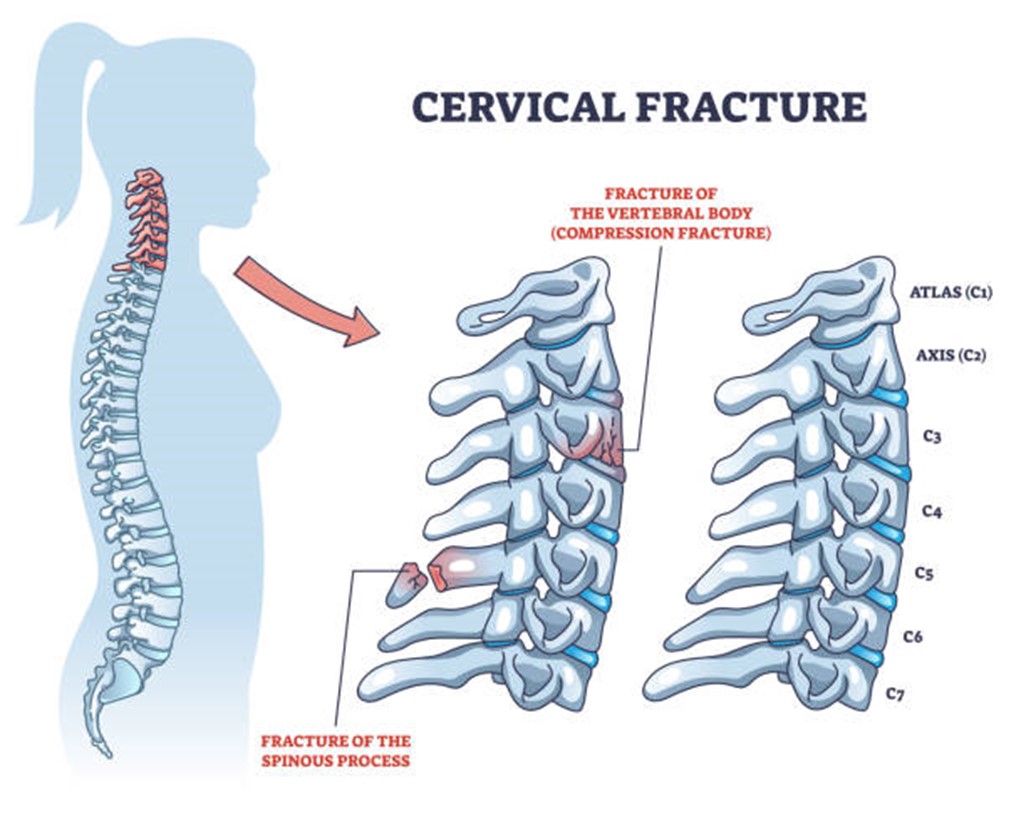
A cervical spinal fracture, commonly referred to as a broken neck, is a severe injury involving a fracture in one or more of the seven cervical vertebrae (C1–C7) in the neck. It can range from mild fractures that heal with conservative treatment to severe injuries that may cause spinal cord damage and long-term disability.
Causes and Risk Factors
- Common Causes
- Traumatic Causes
- High-Impact Injuries:
- Motor vehicle accidents: A common cause of severe spinal trauma.
- Falls from significant heights: Particularly in older adults or those involved in risky activities.
- Sports injuries: Contact sports, gymnastics, or high-speed activities like skiing can result in fractures.
- Direct Blows to the Spine: From objects or during physical altercations.
- Penetrating Injuries: Such as gunshots or stabbing injuries to the back.
- High-Impact Injuries:
- Osteoporosis
- Age-Related Bone Weakness: Osteoporosis makes bones fragile and more susceptible to compression fractures, even from minor activities like bending, lifting, or coughing. Most common in postmenopausal women and older adults.
- Pathological Fractures
- Bone Cancer or Metastases: Cancer spreading to the spine (e.g., from breast, prostate, or lung cancers) weakens vertebrae, increasing the risk of fractures.
- Infections: Spinal infections like osteomyelitis or tuberculosis (Pott’s disease) can compromise bone integrity.
- Chronic Diseases: Conditions like rheumatoid arthritis or severe kidney disease can lead to weakened bones.
- Degenerative Conditions
- Spondylosis: Advanced degeneration of the spine increases the risk of fractures.
- Ankylosing Spondylitis: Fusion of vertebrae in advanced AS can make the spine rigid and prone to fractures, even with minor trauma.
- Lifestyle and Nutritional Factors
- Poor Bone Health:Vitamin D deficiency or inadequate calcium intake can lead to weaker bones.
- Smoking and alcohol use:Both can reduce bone density and increase fracture risk.
- Congenital or Genetic Disorders
- Osteogenesis Imperfecta:A rare genetic disorder causing brittle bones, leading to frequent fractures.
- Spinal Deformities:Congenital conditions like scoliosis can sometimes predispose individuals to fractures.
- Physical Overload or Strain
- Excessive weightlifting or repetitive heavy lifting can cause stress fractures, especially in younger athletes.
- Improper technique during strenuous activities.
- Minor Trauma in Compromised Spines
- Individuals with pre-existing spinal conditions, such as previous surgery or degenerative disc disease, are more susceptible to fractures from minor accidents.
- Falls or Accidents in High-Risk Groups
- Older Adults:Commonly suffer spinal fractures from low-energy falls due to weakened bones.
- Athletes:Engaged in high-impact sports or extreme activities.
- Rare Causes
- Paget’s Disease of Bone: A metabolic bone disorder increasing fracture risk.
- Hyperparathyroidism: Can lead to bone thinning and fractures.
- Traumatic Causes
- Risk Factors
- Osteoporosis or weak bones.
- Degenerative spinal conditions.
- Engaging in high-risk activities without proper safety measures.
Symptoms
- Neck pain: Severe pain in the neck, which may worsen with movement.
- Limited range of motion: Difficulty or inability to move the neck due to pain or stiffness.
- Swelling or bruising: In some cases, there may be visible swelling or bruising around the neck area.
- Neurological symptoms:
- Numbness or tingling: Sensation loss or tingling, often in the arms or hands.
- Weakness: Weakness in the arms, hands, or legs.
- Paralysis: In severe cases, a fracture can cause partial or complete paralysis, especially if the spinal cord is damaged.
- Loss of bladder or bowel control: Damage to the spinal cord can affect bladder and bowel function.
- Difficulty breathing: If the fracture affects higher cervical vertebrae (especially C1-C3), it can impair the ability to breathe properly due to damage to the diaphragm muscle.
- Shock: In cases of severe trauma, symptoms like low blood pressure, rapid pulse, and cold skin may occur.
Diagnosis
A cervical spinal fracture is diagnosed using:
- Physical Examination:
- Initial assessment for pain, swelling, and neurological function.
- Imaging Tests:
- X-rays to identify the fracture location.
- CT scans for detailed bone structure imaging.
- MRI to evaluate spinal cord or soft tissue injuries.
Treatment
Treatment depends on the severity of the fracture:
- Non-Surgical Treatment:
- Immobilization using a cervical collar or halo brace.
- Pain management and activity restriction.
- Surgical Treatment:
- For unstable fractures or spinal cord involvement, surgery may involve spinal fusion or placement of hardware to stabilize the spine.
Physiotherapy Management
Physiotherapy is a critical part of rehabilitation for cervical spinal fractures, focusing on restoring mobility, strength, and function after immobilization or surgery.
- Goals of Physiotherapy:
- Relieve pain and improve neck mobility.
- Strengthen neck and upper body muscles.
- Enhance postural alignment and overall function.
- Prevent secondary complications like muscle atrophy or stiffness.
- Physiotherapy Interventions:
- Pain Management:
- Heat or cold therapy to reduce pain and inflammation.
- TENS (Transcutaneous Electrical Nerve Stimulation) for pain relief.
- Gentle Mobility Exercises:
- Start with passive range-of-motion exercises under supervision.
- Gradually progress to active movements to improve flexibility and restore mobility.
- Strengthening Exercises:
- Focus on isometric neck exercises initially.
- Gradual incorporation of resistance exercises for neck, shoulders, and upper back.
- Postural Training:
- Emphasis on maintaining proper head and neck alignment.
- Ergonomic advice for daily activities to prevent strain.
- Core Stabilization:
- Strengthening core muscles to support the spine and improve balance.
- Functional Training:
- Training to regain confidence in daily activities, including lifting, bending, and sitting.
- Pain Management:
- Benefits of Physiotherapy:
- Faster recovery and return to daily activities.
- Improved strength, posture, and overall function.
- Reduced risk of complications and secondary injuries.
- Precautions:
- Avoid high-impact activities or heavy lifting during recovery.
- Follow the physiotherapist’s guidance on exercise progression.
- Monitor for signs of pain or discomfort during exercises.
Prevention of Cervical Spinal Fractures
- Practice Safety in Activities:
- Use protective gear such as helmets in sports and activities.
- Avoid diving into unknown or shallow waters.
- Prevent Falls:
- Use assistive devices like handrails or walking aids when necessary.
- Keep living spaces free of clutter to minimize tripping hazards.
- Strengthen Bones and Muscles:
- Maintain a healthy diet rich in calcium and vitamin D.
- Engage in weight-bearing exercises to improve bone density.
- Practice Good Posture:
- Avoid prolonged forward head posture or heavy loads on the neck.
- Ensure ergonomic setups at workstations to reduce strain.
- Avoid High-Risk Behaviors:
- Refrain from reckless driving or activities without proper training and safety precautions.
- Regular Check-Ups:
- Periodic bone density tests for individuals at risk of osteoporosis.
When to Seek Medical Help?
Seek immediate medical attention if you experience severe neck pain following trauma, difficulty moving the neck, or any signs of neurological issues such as numbness, tingling, or weakness. Early diagnosis and treatment are crucial to prevent complications.
Conclusion
Cervical spinal fractures are serious injuries that require prompt medical attention and comprehensive management. Physiotherapy plays an essential role in rehabilitation, helping individuals regain strength, mobility, and function. Prevention through safe practices, proper posture, and bone health can significantly reduce the risk of these injuries, ensuring better neck and spine health.